
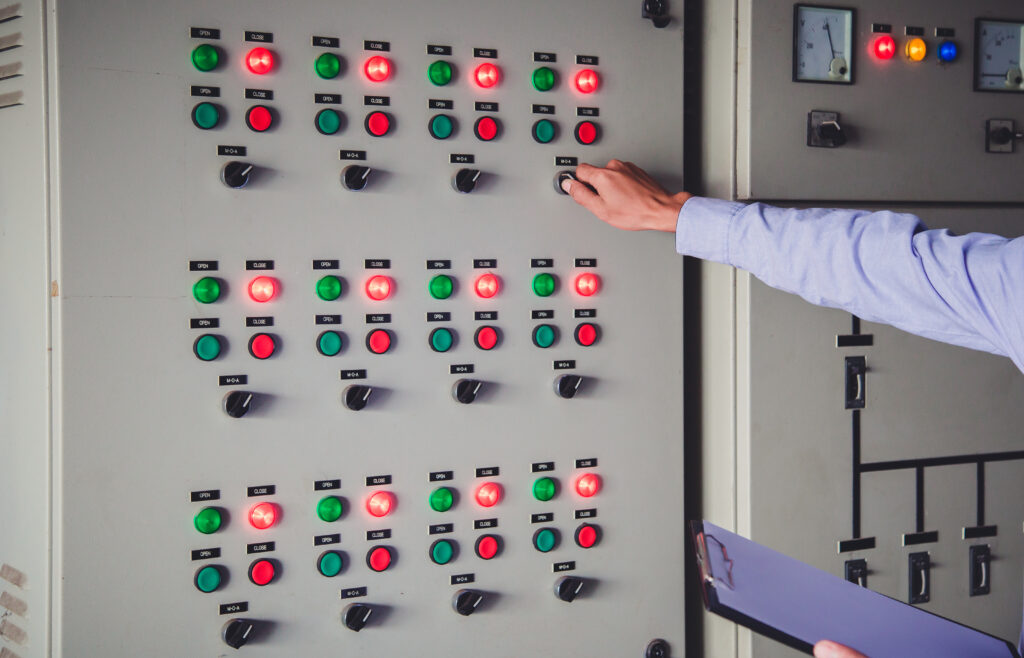
In the age of smart manufacturing, automation is the backbone of every efficient industrial process. Among the most critical components driving this transformation are PLC (Programmable Logic Controller) and SCADA (Supervisory Control and Data Acquisition) systems. Together, they form the heart of modern industrial control and monitoring.
What Is a PLC?
A Programmable Logic Controller (PLC) is a rugged digital computer designed to control industrial processes such as machinery, assembly lines, or robotic devices.
PLCs receive input data from sensors, process it according to a set of programmed instructions, and then trigger outputs that control devices like motors, valves, and pumps.
They offer unmatched reliability, fast response times, and flexibility to handle complex automation tasks across industries like manufacturing, packaging, and energy.
What Is SCADA?
SCADA systems provide a higher-level overview of industrial operations. They collect and analyze data from multiple PLCs, enabling operators to visualize, control, and monitor entire plants in real time.
A SCADA system typically includes:
- Human Machine Interfaces (HMIs) for graphical visualization
- Data loggers and historians for performance tracking
- Alarm systems for process alerts
With SCADA, industries can remotely manage operations, detect issues early, and make informed decisions based on live data.
How PLC and SCADA Work Together
PLCs act as the “brain” of local operations, while SCADA serves as the “eyes and ears” of the system. The PLC executes real-time control at the machine level, and SCADA supervises overall performance, ensuring everything runs smoothly.
For example, in a water treatment plant, PLCs control pumps and valves, while SCADA monitors flow rates, pressure levels, and system efficiency.
Benefits of Integrated PLC–SCADA Systems
Real-Time Monitoring and Control – Instant visibility into every process.
Improved Decision-Making – Data-driven insights enhance operational performance.
Reduced Downtime – Early detection of faults prevents costly interruptions.
Scalable and Flexible – Easy to expand and modify as processes evolve.
Enhanced Safety – Automated alarms and system overrides improve plant safety.
Conclusion
The integration of PLC and SCADA has redefined how industries operate. As automation technologies advance, these systems will continue to evolve — bringing smarter, more efficient, and sustainable industrial control for the future.
